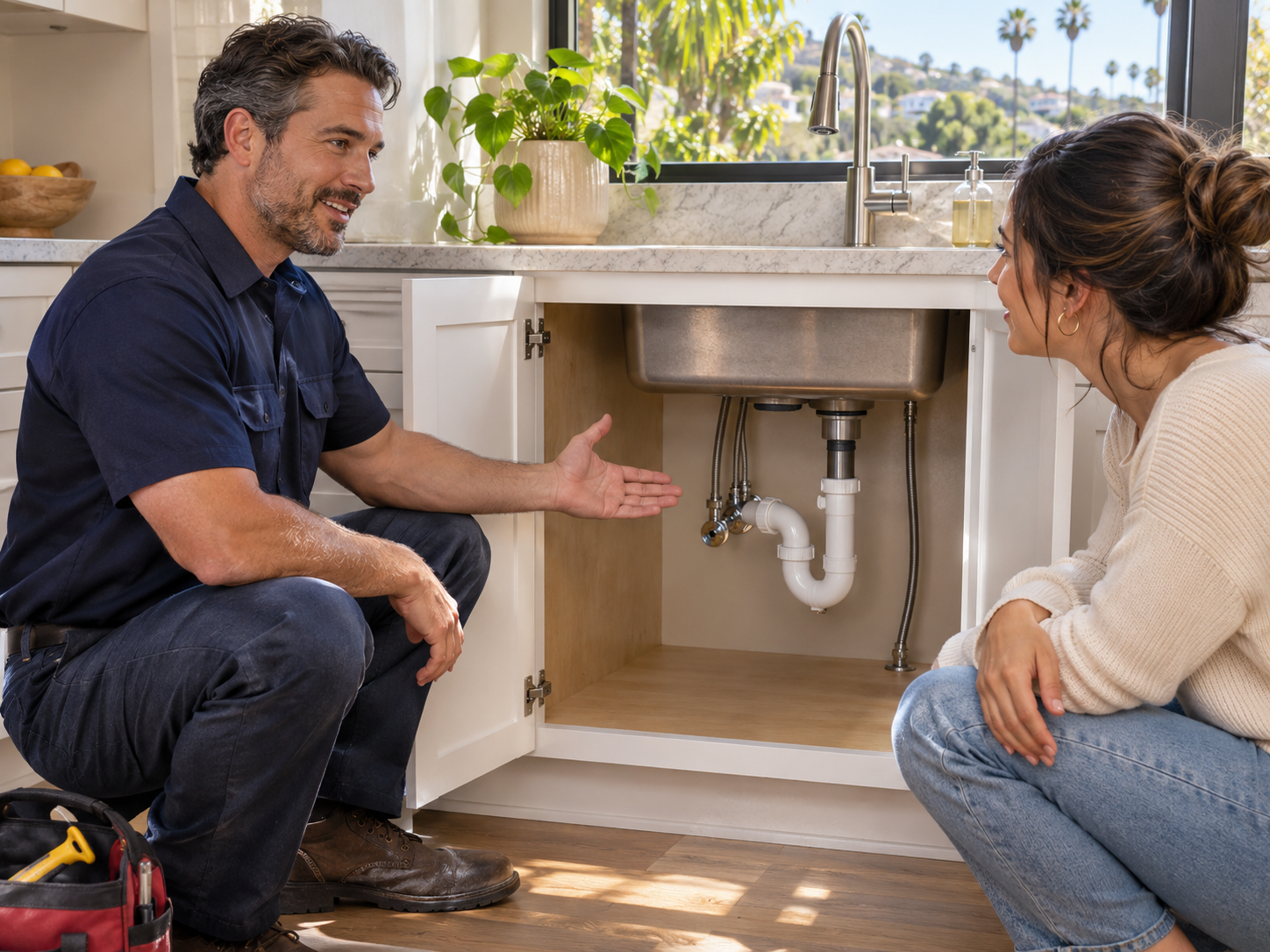
Residential Plumber Mission Viejo CA Who Finds the Cause First
Clogged drains, hidden leaks, failing water heaters and supply line problems, handled with careful diagnosis and clear communication. We explain what is happening in your home before any repair begins.
No guesswork repairsWe confirm the source of a plumbing problem, then recommend the repair that fits it.
Home Plumbing Service
Plumbing help built around your home, not a script
Most plumbing calls start with a symptom: water where it should not be, a drain that will not keep up, or hot water that runs out too soon. The symptom tells you something is wrong. It rarely tells you why. Replacing parts until the problem goes away wastes your time and money, and it can leave the real cause in place.
Backed by more than 20 years of plumbing experience, Rapid Plumber Mission Viejo CA focuses on homes and the people who live in them. Each visit starts with questions about what you have noticed, then moves to an inspection of the fixtures, valves, drains and piping involved. Once we understand the cause, we explain it in plain language and lay out your options.
Diagnosis before repair. We trace the symptom back to its source before recommending work.
20+ years of experience. Decades of hands-on plumbing knowledge guide every inspection and repair recommendation.
Plain explanations. You will know what failed, why it matters and what fixing it involves.
Respect for your home. We protect floors and work areas and clean up when the job is done.
Testing before we leave. Repairs are run and checked so you can see the result.
Our Services
Six core plumbing services for Mission Viejo homes
Pick the description closest to what you are seeing. Each page explains common causes, what an inspection looks for and what to expect from the repair.
Drain Cleaning
A sink that drains slowly, a tub that holds water or a toilet that gurgles each points to a restriction somewhere in the drain path. We clear the blockage and look at why it formed, so a recurring clog gets a real answer.
Hidden leaks show up as a higher water bill, a damp patch of drywall, a warm spot on the floor or the sound of running water when everything is off. We narrow down the source methodically, then plan the least disruptive repair.
No hot water, lukewarm showers, popping noises or water around the base of the tank. We diagnose the unit, explain whether a repair makes sense for its condition and help you weigh replacement options when it does not.
When several drains back up together, or wastewater appears in a tub or shower when a toilet flushes, the trouble may be in the main line leaving the house. We investigate the line and explain what is causing the backup.
Running toilets, weak flushes, rocking bowls, dripping spouts and leaks under the sink. Most of these come down to worn seals, valves or connections, and we will tell you honestly whether a fixture is worth repairing.
Weak pressure throughout the house, a meter that moves when nothing is on, or a wet area that never dries can point to the pressurized supply line. We identify the affected section and outline repair or replacement paths.
The same symptom can have several causes. This table is a starting point for understanding what you are seeing and where a plumber would begin looking. It is not a substitute for an inspection.
Possible causes are examples. The actual source is confirmed on site.
What you notice
What it may indicate
Where to start
One slow sink or tub
A local buildup of hair, soap residue or debris in the trap or branch line serving that fixture.
Why finding the source matters more than fixing the symptom
A damp cabinet floor might come from a loose drain slip nut, a weeping supply connection, a cracked faucet body or condensation. Each needs a different fix. Treating the wrong one means the problem returns, sometimes after it has done more damage.
Our diagnostic approach is simple: isolate, observe, confirm. We separate fixtures and sections of piping so we can see which one is responsible, watch how the problem behaves under normal use, and confirm the cause before recommending work. That approach keeps repairs targeted and helps avoid opening walls or floors unless the evidence calls for it.
We also look for related issues while we are there. A clogged drain may reveal a venting problem. A water heater failure may draw attention to pressure that is higher than the system was designed for. When we spot something worth knowing about, we tell you and let you decide what to do about it.
Start with your observations
When did it begin, which fixtures are involved and does it happen at certain times? Your answers shape where we look first.
Isolate fixtures and sections
Closing valves and testing fixtures one at a time separates supply problems from drain problems and narrows the search.
Observe the system working
Water meter readings, pressure and how a drain behaves under load help show what is really happening inside the pipes.
Confirm, then recommend
Once the cause is clear, we explain it and outline the repair options, including what each involves.
What to Expect
From your first call to a tested repair
Knowing what happens next makes a plumbing problem less stressful. Here is how a typical visit unfolds.
1
Initial contact
Call or send a request. We ask what is happening, how urgent it seems and how to reach you, then check availability for a visit.
2
On-site inspection
We review the affected fixtures and piping, ask follow-up questions and isolate the source of the problem.
3
Findings and options
You hear what we found and what each repair option involves. Nothing moves forward until you approve it.
4
The repair
We protect the work area, complete the agreed scope and keep you informed if anything unexpected comes up.
5
Testing and cleanup
The repair is run under normal conditions and checked for leaks or drainage, and the area is cleaned before we leave.
Before you go: we point out anything worth watching, such as a valve that is starting to stiffen or a drain that could benefit from routine care, so you know what to keep an eye on.
Making the Call
Repair or replace? The factors that usually decide it
There is no universal rule, but the same handful of questions tends to guide the decision for fixtures, water heaters and piping alike.
A repair often makes sense when
The failure is limited to one part and the rest of the system is in sound condition.
The problem traces back to a wear part such as a washer, cartridge, flapper or valve.
The surrounding piping or fixture body shows no corrosion, cracking or repeated failures.
Replacement parts are available and compatible with what is installed.
The equipment still has useful life and is performing well apart from this issue.
Replacement is worth discussing when
Patching one spot is likely to be followed by another failure nearby.
The same fixture, unit or pipe section has needed repeated repairs.
A tank, fixture body or pipe wall itself is leaking or visibly deteriorated.
Parts are hard to find, or the repair cost approaches that of a new component.
Your household needs have changed, such as more hot water demand or better flow.
Our approach: we explain both paths when both are reasonable, including what each solves and what it leaves unchanged. The decision is yours, and we will not push replacement when a sound repair will do the job.
Understanding Estimates
What affects the cost of a plumbing repair
Two jobs that sound alike on the phone can be very different once the pipes are in view. These are the factors that shape the scope of work, and why we give an estimate after the inspection.
01
Location and access
A valve under an open sink is quick to reach. The same repair behind tile, inside a wall or beneath a slab requires more labor and restoration planning.
02
Pipe material and age
Copper, galvanized steel, PEX, CPVC, ABS and cast iron each connect differently. Older or mixed materials can require transition fittings or extra care.
03
Extent of the problem
A single failed fitting is a different job from a section of pipe with widespread corrosion or a drain line with damage along its length.
04
Parts and equipment
Fixture brand, model compatibility and the type of water heater or valve involved all affect what needs to be sourced and installed.
05
Diagnostic depth
Some causes are obvious on arrival. Others, such as intermittent leaks or recurring drain blockages, take more investigation to confirm.
06
Permits and requirements
Certain work, such as some water heater replacements or line replacements, may involve permits or inspections depending on the system and jurisdiction.
Local Perspective
Plumbing in Mission Viejo homes: why no two are alike
Mission Viejo grew in phases over several decades, so the house next door may have been built years apart from yours, with different piping materials, fixture generations and layouts. Many homes have also been remodeled along the way. A kitchen might have new PEX supply lines while the rest of the house still runs on its original copper.
That variety is why we avoid assumptions. Instead of guessing based on a neighborhood or the age of a home, we look at what is installed in front of us and how it is performing. The details below are not true of every home, but they often affect how we approach a job.
Piping routed through or under a slab
When supply or drain lines run beneath a concrete floor, a leak can be hard to see. Isolating the affected line and weighing repair options carefully helps avoid unnecessary floor demolition.
Mixed generations of fixtures and pipe
Original fittings sitting next to modern replacements can create weak points at transitions. We check how materials are joined when diagnosing a leak or planning a repair.
Mineral buildup on fixtures
White crust on faucets and showerheads, or sediment in a water heater, can reduce flow and efficiency. Your water provider's annual water quality report lists the hardness of your supply if you want to know more.
Mature landscaping near sewer lines
Established trees and shrubs can send roots toward small openings in older sewer laterals. Recurring backups in a yard with large trees are worth investigating rather than repeatedly clearing.
Homeowners association considerations
If your home belongs to an HOA, some exterior or shared plumbing may fall under association rules. Checking your governing documents early can clarify who handles what.
Homeowner Questions
Answers to common plumbing questions
Straight answers to what Mission Viejo homeowners ask us most often before booking a visit.
Shut off the water and call promptly if water is actively escaping, sewage is coming up through a drain, or you have no way to stop a leak. A slow drain, a faucet drip or a toilet that runs now and then can usually be scheduled, but it is still worth booking a visit before a small problem spreads to cabinets, flooring or drywall. When you are unsure, call and describe what you see so we can help you judge the urgency and check availability.
Yes. After the inspection we explain what we found, what we believe is causing it and what the repair would involve. If more than one reasonable approach exists, such as repairing a section versus replacing a fixture or line, we walk through the tradeoffs so you can decide. Work begins only after you approve the scope.
We can talk through what usually drives the scope of a job like yours, but a firm number depends on what the inspection shows. Access, the age and material of the piping, the location of the problem and the parts needed all change the work involved. Once the source is confirmed, you receive a clear estimate before anything proceeds.
If a fixture is leaking, close its local shutoff valve, usually found under the sink or behind the toilet. For a larger leak, close the main water shutoff for the house. Stop using drains that are backing up, move belongings away from wet areas and take photos of the problem. Avoid opening walls or using harsh chemical drain products, since they can complicate the repair.
Yes. Many homes contain a mix of original and updated piping, valves and fixtures. We look at the materials present, how they connect and their visible condition, then recommend repairs that suit what is actually in your home rather than a one-size approach.
Let us know which fixtures or rooms are affected, when you first noticed the problem and whether it is constant or comes and goes. Mention anything you have already tried, such as a plunger or closing a valve. For a water heater, the brand, approximate age and whether it is gas or electric help. Photos of the area or the equipment label are useful if you are sending a request.
Not always. Water follows framing, pipes and the slope of floors and ceilings, so a stain or puddle can appear some distance from the actual source. Drain problems behave the same way: a clog in a shared line may show up first at the lowest fixture in the house. Tracing the symptom back to its origin is the first part of every visit.
Ready to get your plumbing problem sorted out?
Tell us what you are noticing and we will help you figure out the next step. Call to check availability, or send a request and we will follow up to schedule a visit.